25 tariff on canada

25 Tariff on Canada: What It Means for Canada US Trade

The 25 tariff on Canada refers to a set of trade duties imposed or threatened by the United States on selected Canadian imports, followed by Canada’s retaliatory tariffs on U.S. goods. These actions affect key sectors such as steel, aluminum, autos, agriculture, and consumer goods, altering established North American trade flows. The tariff also intersects with political narratives around national security, fentanyl trafficking, and trade deficits. Businesses on both sides of the border now face higher compliance burdens, cost uncertainty, and shifting supply-chain strategies.

TOC

Background: Canada-US Trade Relations

Canada and the United States have long maintained one of the world’s most integrated bilateral trading relationships. From the early 1990s under NAFTA to the modernized USMCA agreement that came into effect in 2020, both countries operated within a system designed to reduce tariffs, streamline rules of origin, and support cross-border integration. The transition from NAFTA to USMCA introduced updated content requirements for automobiles, stronger labor rules, and enhanced enforcement mechanisms, but the foundational principle of tariff-free trade for qualifying goods remained the same.

Canada as a key U.S. trading partner – volumes, sectors

The U.S. depends heavily on Canada as both a supplier and buyer. Canada is often the first or second-largest trading partner of the U.S., moving hundreds of billions of dollars in goods annually. Top categories include vehicles, machinery, energy products, agricultural commodities, metals, and consumer goods. The integration is so deep that certain auto parts cross the border six to eight times before final assembly. In industries from aerospace to forestry, Canadian inputs contribute directly to U.S. supply chains, and vice-versa.

Traditional tariff-free trade and where duties did apply

Before the recent tariff wave, most Canadian-made goods that met NAFTA or USMCA rules entered the U.S. duty-free. Non-originating goods, certain dairy or poultry products, and specific controlled items could still attract duties, but the general operating assumption for businesses was predictable market access. The sudden re-imposition or threat of 25 percent duties disrupted decades of planning, pricing structures, and cross-border logistics.


The 25 % Tariff: Canada’s Retaliation & U.S. Action

Canada’s retaliatory action involved a 25 percent tariff applied to selected U.S.-origin goods, effective March 13, 2025. The listed items included steel and aluminum products, certain machinery, household items, and targeted consumer goods chosen to pressure politically sensitive U.S. regions. Such lists often resemble prior retaliatory rounds related to steel and aluminum disputes, where Canada mirrored U.S. measures to create equal economic pressure. The strategy was not only economic but political: to encourage dialogue by influencing constituencies that matter to U.S. lawmakers.

Q: Did Canada target goods with political impact?
A: Yes, retaliation lists often include products sourced from politically influential states to encourage negotiation.

U.S. response: Donald Trump threatening/implementing tariffs on Canadian imports (25 % → 35 %)

The U.S. administration, led by Donald Trump, signaled that tariffs on Canadian imports could increase from 25 percent to 35 percent if Canada did not conform to U.S. demands on security, trade, and border controls. These threats resembled earlier trade actions where tariff pressure was used as negotiation leverage. For industries already stressed by inflation, supply-chain delays, and labor shortages, the possibility of a 35 percent rate created immediate pricing risks and uncertainty in forward contracts. Importers began reassessing sourcing strategies, while manufacturers explored how to classify goods under USMCA to avoid new duties.

What the 25 % tariff covers: non-USMCA goods, steel & aluminium, autos etc.

The 25 percent tariff largely applies to non-USMCA compliant products. Goods lacking proper certificates of origin or exceeding foreign-content thresholds face duties even if produced in Canada. Additionally, steel, aluminum, and automotive goods frequently attract tariff scrutiny due to their strategic importance. Autos and auto parts are especially vulnerable because small deviations in content percentages or supplier origin can disqualify an entire shipment from USMCA benefits. This reality forces manufacturers to maintain detailed tracking of materials, suppliers, and production steps.

How the tariffs are computed & applied at the border (personal goods vs commercial)

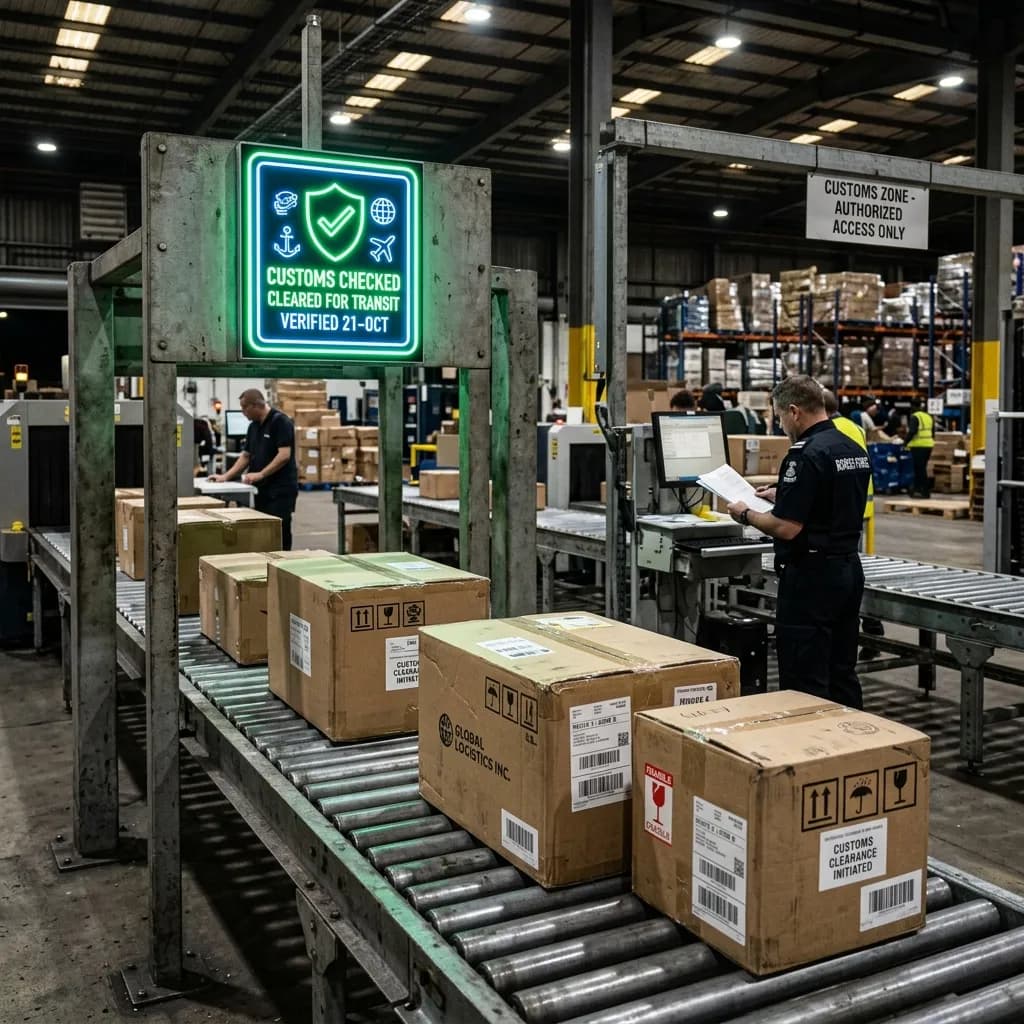
Tariff calculation at the border follows an ad valorem model: a 25 percent charge is added to the value for duty. For commercial shipments, customs brokers prepare entry documents showing classification, origin, valuation, and applicable duty. Personal travelers bringing goods from Canada may also face duties if items exceed exemption limits, though enforcement tends to focus on commercial flows. For businesses, the biggest challenge is ensuring correct HS codes, verifying documentation, and preparing for potential audits by U.S. Customs and Border Protection (CBP).

Q: Do personal travelers routinely pay 25 percent duty?
A: Only if bringing in dutiable goods above personal exemption limits; commercial importers face the primary burden.


Why the Tariffs? Motivations & Triggers

Though the U.S. occasionally claims a trade deficit with Canada, the actual data often shows a small surplus for the U.S. when services are included. Goods-only calculations fluctuate depending on energy prices, auto trade cycles, and currency movements. Politically, however, deficits can be framed as evidence of unfair trade practices, giving administrations a justification to impose tariffs even when underlying economic patterns are more balanced.

The fentanyl and national-security narrative: U.S. asserts Canada is source/transit of illicit opioids

A political driver behind the tariff rhetoric involves U.S. assertions that fentanyl, precursor chemicals, or illicit opioids enter the U.S. through Canada. Reports by U.S. security agencies often highlight the northern border as a potential vulnerability. This narrative provides a national-security justification for economic restrictions even though trade experts argue that border security and trade policy should be treated separately.

Canada’s view: How much fentanyl actually comes from Canada? Data (<1% at Northern border)

Canadian and U.S. border data generally indicate that less than one percent of illicit fentanyl seized in the U.S. originates from the northern border. The majority transits through the southern border or via international parcels. Canada argues that the fentanyl narrative is being leveraged politically and does not reflect actual enforcement statistics. Ottawa maintains that cooperation and intelligence-sharing, not tariffs, are the appropriate response to opioid trafficking.

Retaliation logic and trade leverage – how Canada views it and seeks to respond

Canada’s approach emphasizes proportional retaliation. Ottawa typically applies equivalent tariffs targeting U.S. sectors with strong lobbying power to motivate negotiation. Canada’s trade commissioner service advises companies on diversifying markets, enhancing compliance, and reducing exposure to sudden tariff shocks. The goal is to maintain leverage while avoiding escalation that could damage long-term relations.

Q: Why does Canada retaliate instead of accepting the tariffs?
A: Retaliation is meant to restore balance and encourage the U.S. to negotiate or reduce tariffs.


Sectoral Impact: Who is Affected?

Steel and aluminum sit at the center of most North American tariff disputes. Manufacturers rely on Canadian metal for automotive, aerospace, and construction applications due to proximity and standardized quality. When the U.S. imposes a 25 percent tariff on Canadian metals, procurement costs rise immediately. Canadian counter-tariffs on U.S. metals then create a loop of cost increases that ripple across multiple sectors. Many American manufacturers have previously stated that Canadian metal is essential to their supply chains due to grade consistency and timeline reliability.

Historical tariff levels on steel and aluminum have shifted since the 2018 Section 232 actions. Duties were removed, reinstated, or threatened multiple times, creating chronic uncertainty. Companies with long-term capital equipment projects find these fluctuations particularly difficult because raw material costs can swing 20–35 percent within months.

Automobiles & auto parts: 25 % tariff elements, USMCA exemption nuances

The automotive sector is the most complex because it relies on intricate rules of origin. A 25 percent tariff on non-compliant vehicles or parts can destroy competitiveness instantly. To qualify for USMCA duty-free status, a vehicle must meet regional value content (RVC) thresholds, labor rules, steel/aluminum sourcing quotas, and specific parts-origin requirements.

Auto components, origin rules, and USMCA compliance tests create significant administrative workloads. Manufacturers must document the origin of components as granular as fasteners, wiring assemblies, and microchips. Even a minor non-compliant part can disqualify a full shipment. This is why many automakers maintain full-time trade compliance teams.

Agriculture, consumer goods, other affected sectors (e.g., orange juice, beer, motorcycles)

Agriculture is hit through targeted retaliatory lists that include produce, juices, grains, and processed foods. Consumer goods such as household items, beer, and recreational vehicles (including motorcycles) are commonly selected due to their visibility in local markets. For businesses that rely on predictable margin structures, even a 10 percent cost increase can shrink profitability, and a 25 percent tariff can wipe it out entirely.

Small business, exporters & importers: how to navigate the tariff environment

Small businesses feel the tariffs most intensely because they lack in-house compliance teams. Many must depend on customs brokers, freight forwarders, and third-party consultants. Practical measures include:

• Requesting detailed supplier origin documents
• Reclassifying goods to proper HS codes
• Exploring tariff engineering options
• Negotiating shared-cost agreements with partners
• Considering partial sourcing shifts to tariff-free suppliers

Q: Should small businesses shift sourcing away from Canada or the U.S.?
A: Not necessarily; optimizing documentation and verifying USMCA eligibility is often more effective than switching suppliers.


Tariff Mechanics & Compliance: What Importers Need to Know

Many importers confuse marketing labels with customs requirements. A product may say “Made in Canada” for consumer packaging, but U.S. Customs requires specific origin determination based on substantial transformation and HS classification shifts. For USMCA, the product must meet detailed rules of origin to qualify for duty-free access. These rules determine whether a 25 percent tariff applies.

Calculation of the duty: additional ad valorem 25 % (or 35 %) + other duties

Tariffs are added on top of regular MFN (most-favored-nation) duties. For example:

Value for duty: $10,000
MFN duty: 3% ($300)
Tariff surcharge: 25% ($2,500)
Total duty: $2,800

If tariffs rise to 35 percent, the charge becomes even more significant. Importers need precise documentation because random CBP audits can reassess duties retroactively.

Exemptions under USMCA and how to claim them

A properly completed USMCA Certificate of Origin is required to claim exemption. Importers can self-certify, but they must maintain documentation proving origin for at least five years. Missing or incorrect certificates result in denied exemptions and full tariff assessment. Many businesses rely on a “blanket certificate” covering all shipments for 12 months, though CBP may still request further evidence.

Monitoring for transshipment risk & enforcement (how goods may be re-routed)

Transshipment—routing goods through Canada or the U.S. to disguise origin—is a major enforcement focus. Countries such as China or Vietnam may attempt to route goods through North America to avoid tariffs. CBP uses supply-chain audits, data analytics, and physical inspections to detect patterns. Companies must maintain evidence of manufacturing steps to avoid penalties.

Advice for Canadian exporters and U.S. importers: risk mitigation, documentation, alternative markets

Businesses on both sides should:

• Strengthen documentation trails
• Conduct internal origin audits
• Consider alternative markets in Europe or Asia
• Reevaluate INCOTERMS to shift cost exposure
• Use bonded warehouses or foreign trade zones (FTZs) for duty deferral

Q: Can FTZs help avoid the tariffs?
A: They can delay payment or allow tariff optimization, but final duties still apply when goods enter U.S. commerce.


Future Outlook & Strategic Considerations

Negotiations typically follow a cyclical pattern: tariff threats, consultations, sector lobbying, and partial rollbacks. Large U.S. industries reliant on Canadian inputs often pressure the administration to de-escalate. Canada pushes for clarity and consistency while maintaining a firm retaliatory posture.

Potential escalation: from 25 % to 35 % or more, sectors targeted

Future escalation depends on political developments, border-security debates, and trade-deficit narratives. Autos, metals, and consumer goods remain the most likely targets. Even the threat of escalation creates market volatility, affecting investment decisions and supply-chain planning.

Broader implications: supply chain shifts, trade diversion, bilateral relations

Tariffs accelerate supply-chain diversification as companies look toward Mexico, South Korea, Japan, and EU markets for alternative sourcing. They may also influence long-term bilateral relations by introducing mistrust and pushing Canada to deepen ties with Asia-Pacific partners.

What this means for Pakistan / other third-countries – indirect effects, supply-chain opportunities

For Pakistan and other third-country exporters, tariffs can create opportunities to supply goods that become more expensive when sourced from Canada or the U.S. Textiles, auto components, agricultural goods, and consumer products may find new openings. However, compliance, reliability, and pricing must align with North American expectations.

Emerging third-party markets for Canadian goods include Asia, the Middle East, and South America, where Canadian exporters are actively seeking to offset U.S. tariff risks. Countries with strong trade ties to Canada may benefit from diverted investment and supply-chain expansion.

Scenario planning: if tariffs are removed, if they persist, or if they expand to other countries

If tariffs are removed, supply chains will likely revert to prior patterns with renewed investment confidence. If they persist, more companies will shift to multi-country sourcing models. If expanded to other countries, global supply chains could see further fragmentation and regionalization.

Q: Could tariffs eventually apply to more countries beyond Canada?
A: Yes, depending on geopolitical priorities, but targeting Canada has unique political and economic implications.


FAQs: 25 percent tariff on Canada

What is the “25 percent tariff on Canada” exactly?

It is a U.S. duty applied (or threatened) on selected Canadian imports, with Canada imposing equivalent retaliatory tariffs on U.S. goods.

Which goods are subject to the tariffs and which are exempt?

Steel, aluminum, autos, parts, and certain consumer goods are most affected. Goods meeting USMCA origin rules are generally exempt.

How much fentanyl actually comes from Canada into the U.S.?

Data shows less than one percent of illicit fentanyl seized in the U.S. arrives via the northern border, undermining the claim that Canada is a primary source.

What is the risk of the tariff increasing beyond 25 percent?

Political signals suggest possible increases to 35 percent or targeted escalation, especially in sectors like autos or metals.

How can exporters/importers prepare for the tariff regime?

By improving origin documentation, conducting internal audits, exploring FTZs, optimizing HS classification, and diversifying sourcing.

What are the implications for Canada-U.S. trade and global supply chains?

Persistent tariffs push companies to seek new partners, adjust supply chains, and develop resilience strategies, potentially reshaping North American trade patterns.


Similar Posts

Leave a Reply

Your email address will not be published. Required fields are marked *