

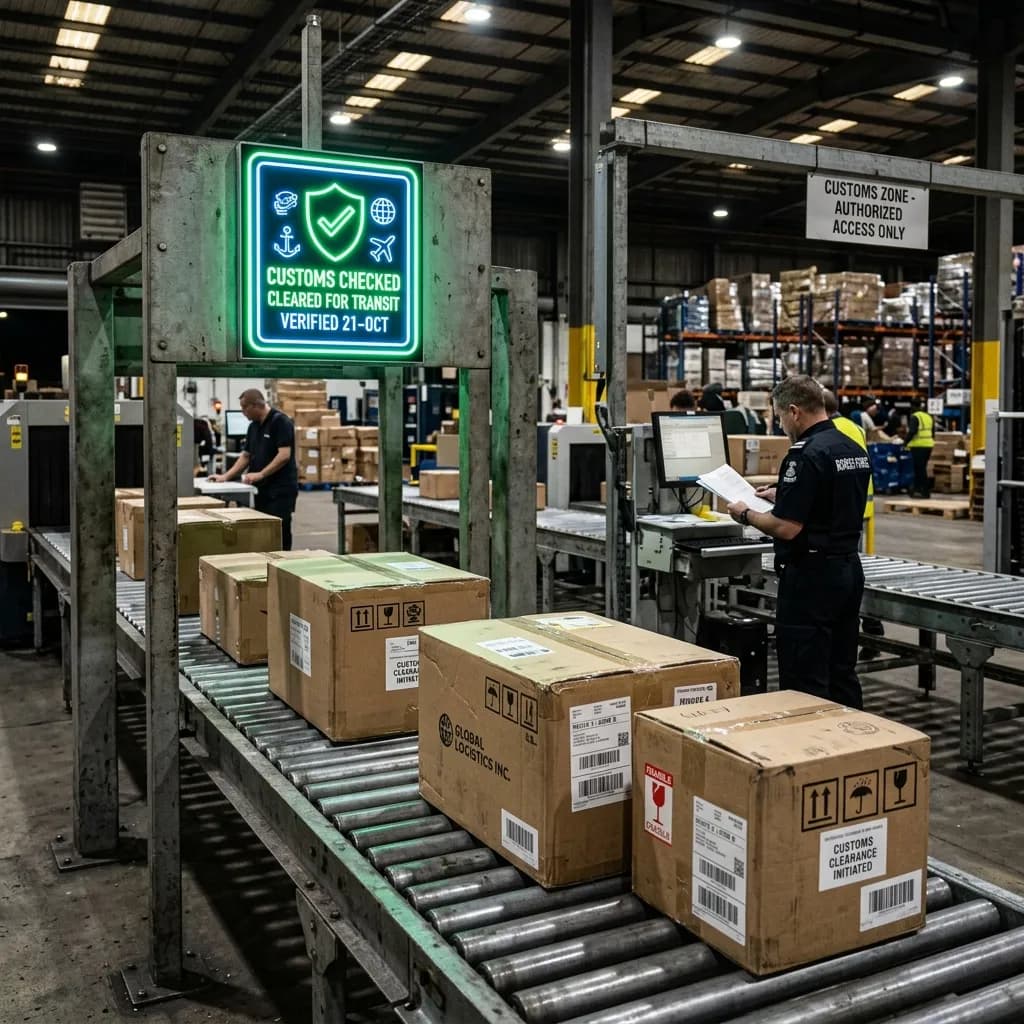
In the high-stakes domain of global trade compliance, classifying your merchandise under generic category names is one of the most frequent causes of customs audit failures, unexpected tariff liabilities, and cargo detention at ports of entry. Importers often search for broad answers like "What is the import duty for electronics?" or "What is the customs tax on passenger cars?" In reality, customs authorities do not recognize broad descriptions. The global Harmonized Tariff Schedule (HTS) is composed of 97 chapters and thousands of highly detailed subheadings, where minor engineering differences or material compositions can cause dramatic shifts in duty rates.
This hierarchical structure means that a product's specific classification dictates its duty rate far more than the country of origin. For instance, advanced consumer electronics like laptops, tablets, and mobile phones carry a baseline 0% Most-Favored-Nation (MFN) rate globally under the international Information Technology Agreement (ITA). However, if a product contains advanced cryptographic capabilities or is classified as telecommunication gear, it may face different subheadings and become subject to protective surcharges (such as Section 301 tariffs on Chinese imports). In contrast, heavy industrial products, watches, and textiles attract standard protective rates ranging from 8% to 32%. Importers must utilize specialized, product-vertical calculators to assess their cargo's exact tariff profiles and compliance requirements.
Furthermore, local consumption taxes and excise surcharges are highly sensitive to product sub-categories. Fine gold jewelry requires distinct purity audits at the border, while automotive cargo attracts registration fees that depend on engine displacement and fuel type. Utilizing a dedicated product directory index allows compliance teams to review standard rates side-by-side, optimizing tax planning before booking shipping space.
1. Category-by-Category Duty Rate & Surcharge Table
Below is a detailed guide covering typical MFN tariff ranges, key protective surcharges, and regulatory requirements across primary commercial categories. Use this directory to estimate baseline rates before drilling down with our specialized sub-calculators:
| Category | Typical MFN Range | Key Surcharges & Compliance Notes |
|---|---|---|
| Mobile Phones | 0% (ITA) | Subject to Section 301 (25%) if China-origin. FCC certification and IMEI registration required for many jurisdictions. |
| Laptops & Tablets | 0% (ITA) | Subject to Section 301 (25%) if China-origin. Battery compliance certifications (such as UN 38.3) apply for air transport. |
| Watches & Chronometers | 3.9% - 9.0% | Complex rates: movement, case, battery, and strap are taxed separately. Gold cases attract high ad-valorem. |
| Gold & Jewelry | 0% - 5.5% | Bullion enters duty-free in most zones. Fine jewelry attracts ad-valorem. Subject to FinCEN and AML declarations. |
| Clothing & Textiles | 8.0% - 32.0% | Among the highest MFN categories. Synthetic fibers attract higher rates than cotton. Country-of-origin rules strictly audited. |
| General Electronics | 0% - 5.0% | Section 301/232 stacking risks. Requires FDA radiation filings for lasers, screen panels, or high-frequency transmitters. |
| Furniture & Bedding | 0% | Anti-dumping duties apply to specific wooden bedroom furniture and metal beds from China. Flame-retardancy certificates required. |
| Iron & Steel Scrap | Varies | Subject to Section 232 national security tariffs of 25% to 50% depending on source smelter location. |
| Alcohol & Tobacco | Excise + Ad Valorem | TTB permits required for commercial imports. Strict traveler baggage allowances apply. Excise tax based on proof-gallon or count. |
| Cosmetics & Skincare | 0% - 6.5% | Subject to strict FDA registration, ingredient safety audits, MoCRA regulations, and import licensing. |
| Toys & Games | 0% | Requires a Children's Product Certificate (CPC) proving lead, phthalates, and physical safety compliance under CPSC. |
| Medical Equipment | 0% | FDA medical device listing, premarket notifications (510k), and foreign facility registration are mandatory before entry. |
| Commercial Drones | 2.6% | Subject to Section 301 (25% to 100%) and NDAA procurement restrictions. FCC and FAA transmitter registrations apply. |
| Passenger Vehicles | 2.5% Cars / 25% Trucks | Subject to Section 232 auto tariffs (25%). EPA Form 3520-1 and DOT Form HS-7 conformity required at border. |
2. Understanding Valuation Structures: Ad-Valorem vs. Specific vs. Compound
When evaluating product-specific duties, importers must understand how customs authorities calculate tax rates. The HTS uses three distinct calculation bases depending on the product type:
- Ad-Valorem Duty: This is the most common method, calculated as a percentage of the item's declared transaction value (either FOB or CIF). For example, importing furniture from Europe carries a 0% rate, while a commercial drone carries a 2.6% rate. A $10,000 drone shipment incurs a basic ad-valorem duty of $260 USD. Surcharges like Section 301 are also ad-valorem.
- Specific Duty: Assessed as a flat monetary fee per physical unit of measurement (weight, volume, or quantity), completely independent of the item's transaction value. For example, crude petroleum might be taxed at $0.05 per barrel, or raw agricultural produce might face a duty of $0.12 per kilogram. This protects domestic farmers from international price drops and ensures stable tax revenues.
- Compound Duty: A combination of both ad-valorem and specific rates applied to the same item. Watches are the classic example of compound duty structures: the case, strap, movement, and jewel count each attract separate ad-valorem and specific rates that are summed to calculate the final border entry tax. This requires an itemized commercial invoice.
3. Classification Logic: HTS Chapters Explained
To understand why classification matters more than country context, you must examine how the Harmonized Tariff Schedule is structured. The HTS system uses a hierarchical numeric structure to group commodities by material, function, and manufacturing level:
- Chapters (First 2 Digits): Broad industrial sectors (e.g., Chapter 85 covers Electrical Machinery).
- Headings (First 4 Digits): Specific product groups (e.g., Heading 8517 covers telecommunication apparatus).
- Subheadings (First 6 Digits): Internationally standardized sub-categories managed by the WCO.
- Statistical Subheadings (8 to 10 Digits): Country-specific lines that determine the final duty and tax rates.
A minor design detail can shift a product between headings. For example, a plastic protective case for a mobile phone is classified under Chapter 39 (Plastic Articles) carrying a 5.3% duty rate. However, if the case has a thin leather backing, it shifts to Chapter 42 (Leather Articles) and faces a much higher 8% to 20% tariff. Compliance managers must utilize the HS Code Finder tool to resolve these granular differences before modeling shipping routes.
4. Partner Government Agencies (PGA) & Border Clearance
Importing specialty products is not merely a tax calculation exercise; it involves satisfying strict regulatory frameworks established by Partner Government Agencies (PGAs). A product's classification flags whether it requires special entry filings:
- Food and Drug Administration (FDA): Regulates medical devices, cosmetics, skincare, pharmaceuticals, and foodstuffs. Importing cosmetics requires filing ingredient lists under the Modernization of Cosmetics Regulation Act (MoCRA), and medical devices require facility registrations and listing numbers.
- Consumer Product Safety Commission (CPSC): Sets safety standards for toys, children's apparel, and cribs. Importers must supply a Children's Product Certificate (CPC) verified by a third-party laboratory proving lead and phthalate levels fall below legal thresholds.
- Environmental Protection Agency (EPA) & Department of Transportation (DOT): Enforces emissions and safety standards for all vehicles, engines, and industrial machinery. Importers must supply EPA Form 3520-1 and DOT Form HS-7 during entry filing.
5. Frequently Asked Questions (FAQ)
Why does the same product have different duty rates depending on classification?
Duty rates are determined by the exact material composition, function, and end-use of the product as defined by the General Rules of Interpretation (GRI). Even slight differences, such as the material of a strap or the presence of a battery, can shift a product into a different HTS subheading with a different tariff rate.
Do electronics really have 0% duty?
Yes, many advanced consumer and industrial electronics have a 0% base MFN rate under the international Information Technology Agreement (ITA). However, if they originate from countries subject to trade disputes (such as China), they are still subject to protective surcharges like Section 301 tariffs (typically 25%).
What extra taxes apply to gold/jewelry imports specifically?
While raw gold bullion enters duty-free, finished fine jewelry is subject to ad-valorem duties (up to 5.5% in the US). Furthermore, importing precious metals requires strict compliance with anti-money laundering (AML) laws, including filing FinCEN Form 105 at the border if carrying more than $10,000 USD in monetary instruments.
Are used cars taxed differently than new cars?
No. The customs duty percentage applied under the HTS (e.g., 2.5% for passenger cars entering the US) is the same for both new and used vehicles. However, the taxable base value is different: used cars are assessed on their current fair market value (or transaction value), whereas new cars are assessed on their actual purchase invoice price.
Why Sourcing Agents Trust Our Commodity Directories
We break down specialty tariff rates, sin excise taxes, and luxury limits for cars, electronics, and gold baggage:
- Excise & Luxury Slabs: Calculates supplementary taxes for alcohol, tobacco, and high-value cars.
- Gold Traveler Rules: Provides up-to-date duty-free allowances for gold jewelry baggage entries.
- Information Technology Concessions: Applies 0% ITA treaty concessions for electronics imports.
How to Estimate Product-Specific Duties
- Select Product Category: Choose from specialized directories like cars, phones, jewelry, or electronics.
- Verify Surcharge Triggers: Check if engine displacement, gold weight, or tobacco units trigger excise taxes.
- Apply Local Sales Taxes: Add country-specific import VAT or GST on top of basic customs duties.
Frequently Asked Product Duty Questions
Why do cars attract such high customs duties?
Governments protect local vehicle manufacturing sectors by assessing steep ad-valorem duty rates (often 50% to 100%+) along with weight-based excise surcharges.
How does the ITA affect electronics import taxes?
The Information Technology Agreement (ITA) is a WTO treaty that slashes customs duties to 0% on hardware like computers, semiconductor chips, and telecommunications gear.
How do customs calculate tax on gold jewelry travelers?
Customs use weight-based allowances. For example, India allows gold baggage entry concessions that differ by passenger gender and stay duration, taxing excess gold at standard ad-valorem rates.