

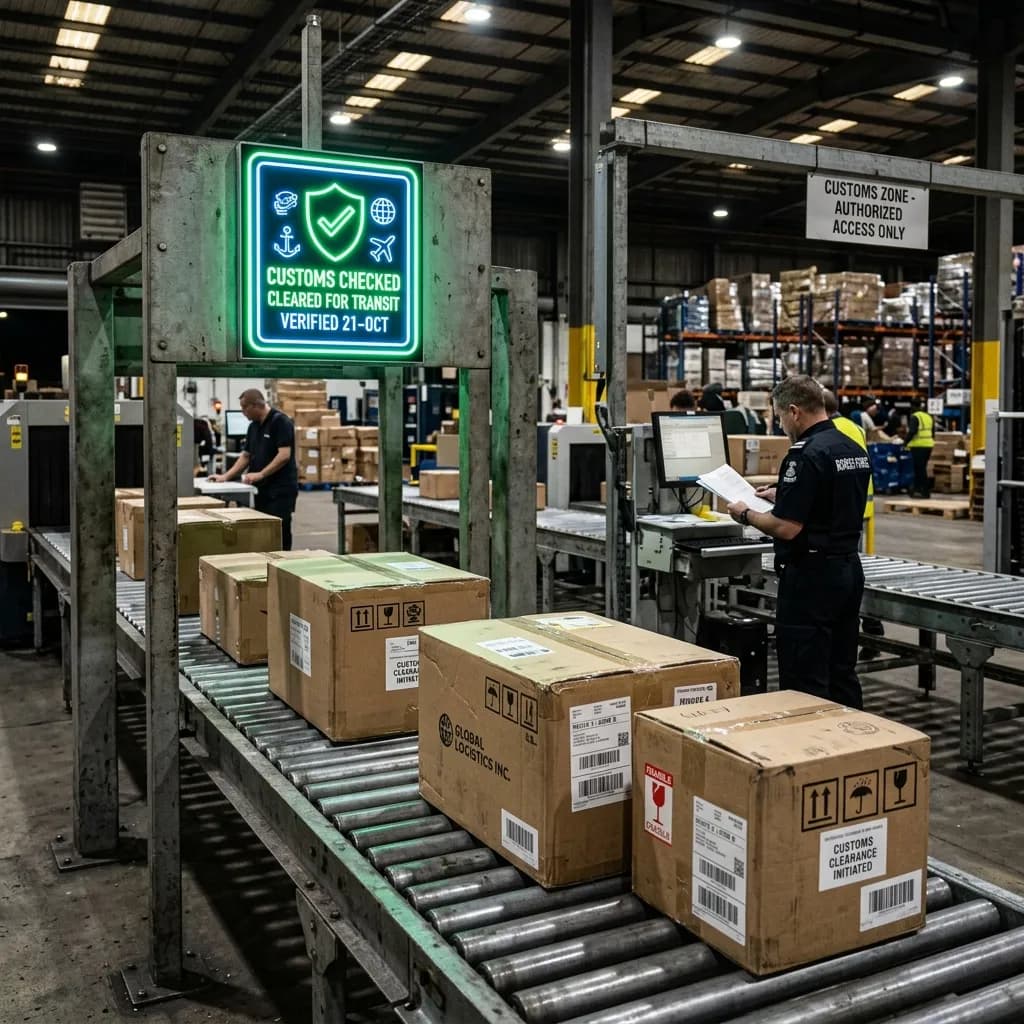
# HS Code Finder: Global Harmonized System Search & Tariff Lookup Guide
The Harmonized Commodity Description and Coding System—universally known as the Harmonized System (HS) or HS Code system—is a standardized international nomenclature developed by the World Customs Organization (WCO). Used by over 200 countries and territories representing 98% of global commerce, HS codes categorize imported and exported merchandise under a uniform 6-digit classification structure. Navigating HS codes accurately is mandatory for international trade compliance, determining Basic Customs Duty (BCD) rates, verifying Free Trade Agreement (FTA) eligibility, and completing customs entry declarations.
Standard Structural Anatomy of a 6-Digit WCO HS Code
The universal 6-digit HS code structure is organized into three hierarchical pairs:
- Chapter (Digits 1–2): Broad commodity category or industry sector (e.g., Chapter 85 = Electrical Machinery).
- Heading (Digits 3–4): Specific product group within the chapter (e.g., Heading 85.17 = Smartphones & Telecommunications Apparatus).
- Subheading (Digits 5–6): Detailed product specification standardized across all WCO member states (e.g., Subheading 8517.13 = Smartphones for Cellular Networks).
National Tariff Extensions: 8-Digit to 10-Digit Codes
While the first 6 digits are globally standardized across all WCO member nations, individual countries append national tariff digits to assess specific local duty rates and collect statistical trade data:
- India (HSN 8-Digit Code): 6 WCO digits + 2 National Tariff Item digits (governed by CBIC).
- United States (HTSUS 10-Digit Code): 6 WCO digits + 2 US Rate Line digits + 2 Statistical Suffix digits (governed by USITC).
- United Kingdom / European Union (10-Digit Commodity Code): 6 WCO digits + 2 Combined Nomenclature (CN) digits + 2 TARIC subheadings (governed by HMRC / EU Customs).
How to Search Our Interactive HS Code Database
To find the accurate 6-digit to 10-digit HS code for your commercial cargo:
- Enter your Common Commercial Product Name or Technical Material Description in the search bar.
- Filter search results by target Destination Jurisdiction (India HSN, US HTSUS, UK Commodity Code).
- Review statutory MFN customs duty rates, partner government agency (PGA) flags, and active trade remedy surcharges.
- Export official classification records for customs broker verification and entry filing.
Frequently Asked Questions
What happens if an importer uses an incorrect HS code?
Declaring an incorrect HS code on customs entries leads to severe administrative penalties, retroactive duty demand notices, cargo seizure, and loss of expedited import clearance privileges (such as Green Channel status).
How often are HS codes updated by the World Customs Organization?
The WCO updates the global 6-digit Harmonized System nomenclature every 5 years (e.g. HS 2017, HS 2022, HS 2027) to incorporate technological advancements and evolving international trade patterns.
Can a single product have different HS codes in different countries?
No. The first 6 digits MUST be identical across all WCO member countries. However, the extended 8-digit or 10-digit national subheadings vary by importing destination.
Technical Audit Trail Requirements for WCO HS Classification
When documenting HS classifications for corporate compliance audits:
- Maintain Product Specification Sheets: Retain manufacturer technical drawings, material safety data sheets (MSDS), laboratory chemical analyses, and functional user manuals.
- Document WCO GRI Decision Path: Log the exact GRI rule (GRI 1 vs GRI 3b) used to determine product classification to defend against customs reclassification audits.
- Track WCO 5-Year Nomenclature Amendments: Update master SKU databases whenever the WCO releases 5-year Harmonized System revisions (e.g. HS 2022 to HS 2027 transition).
Comprehensive Master Guide to Global HS Code Administration
For international trade directors and supply chain managers:
- World Customs Organization (WCO) Governance: The WCO Harmonized System Committee (HSC) meets biannually in Brussels to issue classification opinions, amend Explanatory Notes, and resolve international classification disputes between member states.
- Harmonized System Revision Cycles: Major structural revisions of the 6-digit HS nomenclature take effect every 5 years (HS 1988, HS 1996, HS 2002, HS 2007, HS 2012, HS 2017, HS 2022, HS 2027), renumbering deprecated subheadings and introducing dedicated headings for emerging technologies (e.g. 3D printers, drones, electric vehicles).
- Binding Legal Effect of Section and Chapter Notes: Legal Notes positioned at the start of each tariff section and chapter hold statutory authority equal to the 4-digit heading texts, establishing strict exclusion rules and defining technical terms.
Strategic Compliance: Managing Customs Classification Audit Risks
To ensure long-term regulatory compliance across global trade lanes:
- Periodic Classification Reviews: Re-evaluate internal SKU classification master tables annually to incorporate national tariff schedule updates and new WCO classification opinions.
- Customs Audit Preparedness: Maintain complete technical documentation files—including commercial invoices, bill of lading contracts, laboratory material breakdown certificates, and binding rulings—for 5 years post-entry.
- Pre-Import Binding Ruling Petitions: When importing novel, high-value, or multi-component products, file formal binding ruling applications with national customs authorities (CBP in the US, CBIC in India, HMRC in the UK) to legally secure tariff rates prior to shipment dispatch.
Key Compliance Guidelines for Global HS Code Declarations
To ensure seamless customs clearance across international borders:
- Verify WCO 6-Digit Base: Always ensure your foreign supplier provides the correct WCO 6-digit subheading before converting to local 8-digit or 10-digit national tariff lines.
- Reconcile Commercial Invoices: Match declared HS codes against commercial invoices, packing lists, and origin certificates prior to electronic customs submission.
- Audit PGA Regulatory Triggers: Check destination country partner government agency databases (FDA, EPA, USDA, BIS) to submit compulsory permits alongside entry declarations.
Commodity Code Classification Structure
The Harmonized System (HS) standardizes product classifications into a nested structure:
- Chapters (2-Digits): Broad product categories (e.g. Chapter 85 covers Electrical Machinery).
- Headings (4-Digits): More specific descriptions of goods within a chapter.
- Subheadings (6-Digits): Internationally standardized commodity classifications.
- National Tariffs (8-10 Digits): Local suffixes for duty assessment (e.g. HSN codes in India, HTSUS codes in the USA).
Frequently Asked Questions
What is the difference between HS code and HTS code?
The HS Code is a 6-digit code standardized worldwide. The HTS Code is country-specific (e.g., USA's 10-digit HTSUS code) used to calculate duties. Read more in our HTS vs HS Code Guide.
How do I look up HSN codes for GST in India?
Indian imports require 8-digit HSN codes. You can check matching GST slabs and BCD rates under our India HSN Lookup.
Why Brokers Trust Our HS Code Classification
We navigate the WCO Harmonized System structure to ensure correct tariff mappings and avoid border delays:
- International 6-Digit Base: Aligns with global Harmonized System subheadings used in 180+ countries.
- National Level Extensions: Maps 8-digit HSN codes for India and 10-digit HTSUS codes for the United States.
- Classification Rules: Applies WCO General Rules of Interpretation (GRI) for complex commodities.
How to Search HS Codes
- Identify Raw Material: Determine the primary material composition and function of your commodity.
- Check Chapter Headings: Locate the 2-digit chapter, then expand to the 4-digit heading and 6-digit subheading.
- Match National Suffix: Find your importing country's specific 8-to-10 digit statistical tariff rate.
Frequently Asked HS Code Questions
What is the difference between an HS code and an HTS code?
The HS (Harmonized System) code is the standard 6-digit international classification base. The HTS (Harmonized Tariff Schedule) code is a country-specific extension (typically 8 to 10 digits) used to set local tariff rates.
How do I find my product's HSN code in India?
Use our dedicated HSN search tool to map product names to the Indian CBIC Customs tariff schedule, which uses 8-digit numbers for Basic Customs Duty and IGST slabs.
What are the risks of using an incorrect HS code?
Misclassification can trigger custom audits, seizure of cargo, border clearance holds, retroactive duty bills, and financial penalties.